
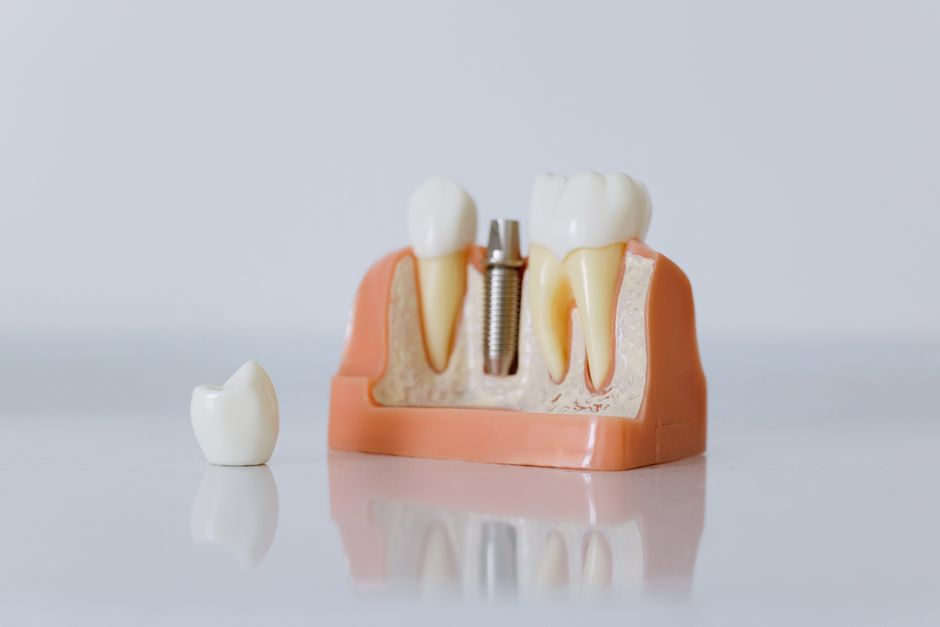
Dentures cost far less up front and need no surgery. Implants cost more, take months, and in return hold teeth still, which is the thing most denture wearers complain about. For a full set of teeth the realistic choice is often not “dentures or implants” but conventional dentures, dentures that clip onto implants, or a fixed bridge on implants. This guide compares dental implants vs dentures on price, comfort, lifespan and risk, using NHS charges and NHS charges checked on 21 October 2026 and named clinic prices checked in October 2026.
The three options people usually mean
“Dentures” and “implants” cover several different treatments. The comparison only makes sense once you know which version of each is being quoted.
| Option | How it stays in | Surgery | Published private price we found |
|---|---|---|---|
| Conventional denture | Rests on the gums, held by fit and suction | None | Full acrylic £1,095, full chrome £1,695 (Whites Dental, London) |
| Implant-retained denture | Removable denture that clips onto 2 to 4 implants | Yes | From £4,995 per jaw (Dental Implants London) |
| Fixed implant bridge (All-on-4, All-on-6) | Screwed to implants, not removed at home | Yes | From £12,995 per jaw (Dental Implants London); £12,000 to £18,000 (TKC Dental) |
The implant prices come from our guide to full arch dental implants, which lists the source page for each clinic. The denture prices come from the Whites Dental fee page. That page quotes different figures for full acrylic dentures in different places (£1,095 in its fee table, £950 and £695 elsewhere), so treat all of these as “from” prices and get a written quote.
What dentures cost in the UK
On the NHS in England
NHS dentures are charged as a Band 3 treatment. The NHS charges page lists Band 3 at £332.10 and says it covers dentures made from plastic or metal, along with crowns and bridges. You pay the highest band needed across a course of treatment, not each band separately. Adjustments are cheaper: minor adjustments fall under Band 1 (£27.90), and adding to dentures or relining and rebasing them falls under Band 2 (£76.60). The page says repairs are free, but if a denture cannot be repaired you pay for a new one.
These are England figures. Scotland, Wales and Northern Ireland run their own charge systems, and the NHS page we checked does not cover them, so look up your own nation’s charges before you rely on the numbers above.
Privately
At Whites Dental, partial dentures start at £600 for one to three teeth in acrylic and rise to £1,295 for a chrome partial replacing more than eight teeth. Its full denture prices in the fee table run from £1,095 (acrylic) to £1,695 (chrome). The page also says some clinics include follow-up visits in the price while others charge separately for follow-ups and relining, which is worth asking about before you agree a fee.
What implants cost in comparison
For a single missing tooth, the comparison is usually with a bridge or a partial denture rather than a full set. In our check of 317 clinics in 34 UK cities, starting prices for a single implant ranged from £1,320 to £4,650, with a median of £2,800. A single implant is private treatment for most people; our NHS dental implants guide explains the narrow cases where the NHS offers them. Cambridge University Hospitals says its NHS implant funding is limited and strict criteria must be met before a patient is accepted.
For a full jaw, the table above shows the gap: from £4,995 for a denture that clips onto implants, and from £12,995 for a fixed bridge, against £1,095 or less for a conventional full denture at the clinic we checked.
Cost over 20 years: an illustration, not a quote
Clinics quote different lifespans for dentures. Torrington Dental says dentures typically need replacing every five to seven years, and David Neal Dental says every five to ten. Take the Whites Dental full acrylic price of £1,095. A replacement every ten years means two dentures in twenty years, £2,190. A replacement every five years means four, £4,380. Neither figure includes relines, repairs or adjustments.
That narrows the gap with an implant-retained denture at £4,995 or more, but it does not close it, and implants have running costs too. The Cambridge University Hospitals leaflet lists worn or broken clips and screws, and wear on the denture, among the long-term issues, and says implant-retained dentures can need refurbishment. Ask any clinic what its maintenance visits and replacement attachments cost before you compare totals.
Comfort, eating and speech
This is where implants have the clearest advantage. A 2024 literature review in Cureus on implant-retained lower dentures reports improvements in biting force, chewing efficiency and speech clarity compared with conventional dentures, and describes conventional complete dentures as unstable, especially in the lower jaw. Two cautions apply. The review looks at a narrow case (mainly lower dentures held by a single implant), and it gives no numbers for chewing or satisfaction, so it supports “usually more stable” rather than any precise gain.
The NHS dentures page is candid about the other side. It can take a few weeks to adapt to new dentures, and problems such as clicking when you talk, slipping or pain mean you should go back to your dentist rather than put up with them. Poor cleaning or missed adjustments can lead to a sore mouth and infections.
What happens to the jawbone and gums
The NHS says your gums and jawbone can change with age, so the fit of a denture can get worse over time. Implants sit in the bone, and the same Cureus review says bone loss around the front lower implants of an overdenture is reported at up to 0.5 mm over five years and about 0.1 mm a year after that, which it describes as lower than is usually seen in toothless ridges. It does not give a head-to-head number against dentures, so we cannot say how much bone an implant saves you, only that the direction is favourable.
Surgery, healing and risk
Dentures involve no surgery, which matters if you take blood thinners, have uncontrolled diabetes or are otherwise a poor candidate for an operation. Our guides cover implants on blood thinners and implants with diabetes or osteoporosis.
The Cambridge University Hospitals implant patient leaflet sets out what implant treatment involves:
- Total treatment time is usually at least a year from start to finish. Bone healing takes three to six months, and a bone graft adds at least four months.
- Success is 80 to 95% over 15 years in patients with healthy mouths, and 80 to 85% over seven years in patients with gum disease.
- Smokers have a much higher failure rate and must stop at least six months before treatment at that hospital.
- Risks include implants failing to bond, infection, and long-term inflammation or bone loss around the implant (peri-implantitis). Permanent numbness is described as very rare.
- You may not be able to wear your existing dentures straight after surgery, and they may need adjusting or relining afterwards.
Our guides to implant complications and how long implants last go into these figures and what “success” actually measures.
Which one suits which situation
- One missing tooth: the real comparison is an implant against a bridge, covered in our implant vs bridge guide. A partial denture is the cheapest route but rests on the gums and neighbouring teeth.
- A lower full denture that will not stay put: an implant-retained denture is the option most often worth pricing, because the lower jaw is where conventional dentures are least stable.
- A full upper denture: fewer than four implants in the upper jaw carried a higher implant loss rate in the meta-analysis cited in our full arch guide, so ask how many implants you are being quoted for.
- Limited budget: a well-made conventional denture on the NHS or privately is a legitimate choice, and you can add implants later if the bone allows. Whether yours does is a question for a scan, not for a brochure.
- Smokers, gum disease, poorly controlled health conditions: expect to be told to fix these first. See our guide for over 60s for age-related questions.
What to ask at a consultation
- Which of the three options are you quoting, and how many implants per jaw?
- Is the price for the whole course, including scan, surgery, the denture or bridge and review visits?
- What does it cost to replace worn attachments or reline the denture, and how often is that usually needed?
- Will my current denture be adapted, or do I need a new one?
- Do I need a bone graft or sinus lift, and is that priced separately?
- What is the plan if an implant fails?
Frequently asked questions
Are implants better than dentures?
They are usually more stable and can improve chewing and speech, but they cost more, involve surgery, and take months. Dentures are cheaper and non-surgical but can slip and need relining or replacing. Which is better depends on your bone, health and budget.
Can I get dental implants on the NHS instead of dentures?
Rarely. Cambridge University Hospitals says NHS implant funding is limited and strict criteria apply. Most patients pay privately for implants, while NHS dentures are charged at Band 3 in England.
How long do dentures last compared with implants?
The NHS says dentures can last for years with good care, and clinics we checked quote five to ten years before replacement. Cambridge University Hospitals quotes 80 to 95% implant success over 15 years in patients with healthy mouths.
Can I have implants later if I start with dentures?
Often, but it depends on how much jawbone you have left. The hospital leaflet says bone height and volume are assessed first and a graft may be needed, which adds at least four months.
Sources checked for this article: NHS: how much will I pay for NHS dental treatment and Cambridge University Hospitals: dental implants in restorative dentistry. This guide is general information, not a substitute for an examination by a dentist registered with the General Dental Council.